Solar Panels for a 3-Bed Semi in Ireland: Cost, Size and Savings
Solar Panels on a 3-Bed Semi: What You Need to Know
A 3-bed semi is the most common house type in Ireland, and it’s well suited to solar. A typical system costs €4,200 to €6,200 after the SEAI grant and saves €600 to €900 per year on electricity. Most homeowners see a full payback in five to eight years, with another 20+ years of free electricity after that.
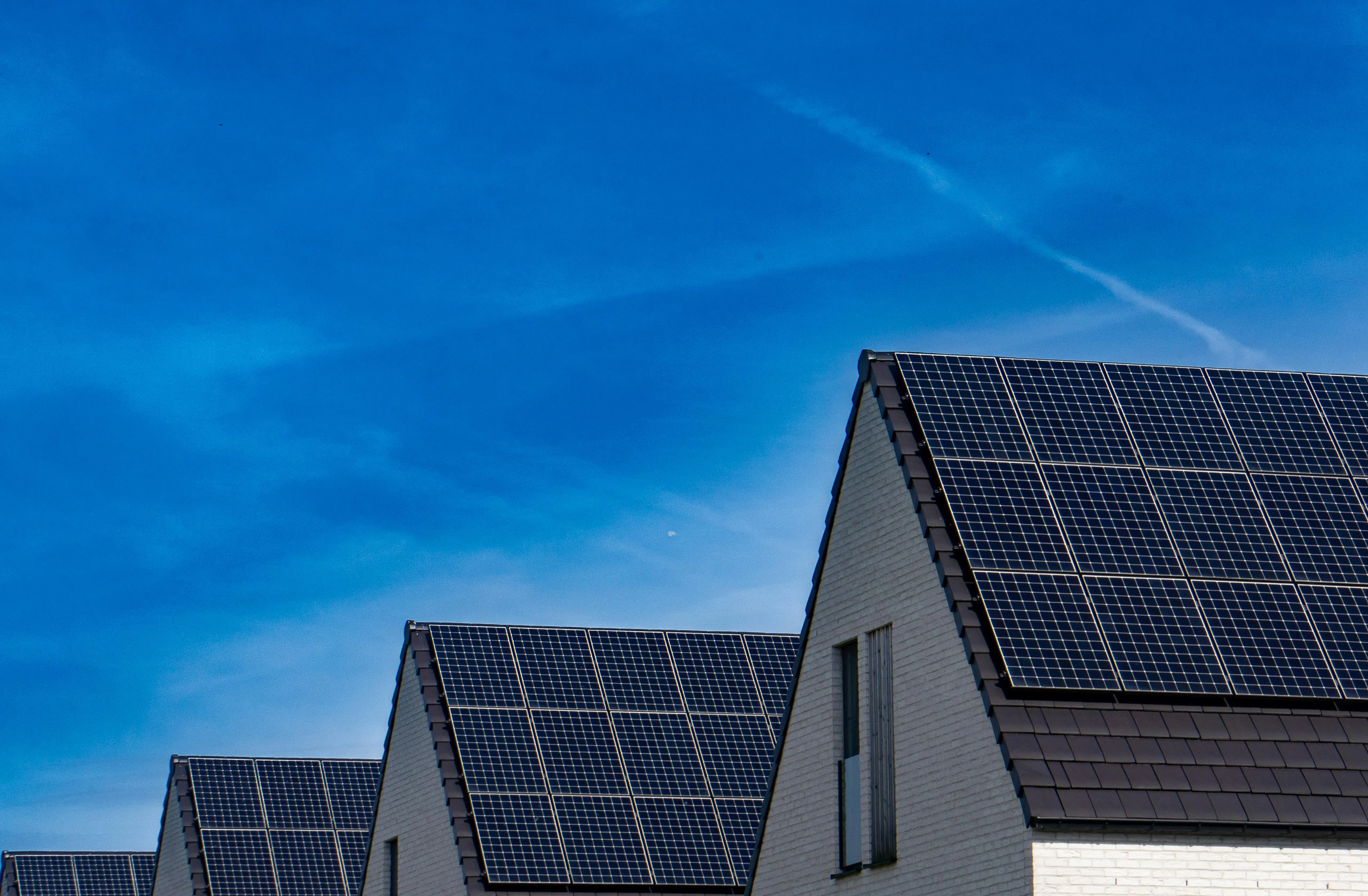
This guide covers the recommended system size for a 3-bed semi, what it costs, how much you’ll save, and the practical considerations around roof layout that are specific to semi-detached homes.
What Size System Does a 3-Bed Semi Need?
A typical 3-4 person household in a 3-bed semi uses 4,000 to 5,000 kWh of electricity per year (the national median is lower at around 3,174 kWh, but higher-occupancy homes with electric showers and immersion heaters use more).
To cover a meaningful portion of that usage, you want a 3.5 to 4.5 kW system. In practical terms, that’s 9 to 12 panels on your roof.
Each modern panel produces around 400 to 450W and measures roughly 1.7m². So 10 panels would take up about 17m² of roof space, which is well within what most semis can accommodate on a single roof face.
A 4 kW system will generate roughly 3,400 to 3,800 kWh per year in Irish conditions. You won’t use all of that directly (some will be generated while you’re out), but with smart usage habits you can self-consume 40 to 50% of it. The rest either goes to the grid via the microgeneration scheme or gets stored in a battery.
Going larger than 4.5 kW on a semi is possible, but the returns diminish. You start exporting more than you use, and the export tariff is much lower than what you pay to import electricity. For most 3-bed semis, 3.5 to 4.5 kW is the sweet spot.
Cost Breakdown
Here’s what a solar PV system costs on a typical 3-bed semi in Ireland, before and after the SEAI solar grant.
| System Size | Panels | Cost Before Grant | SEAI Grant | Cost After Grant |
|---|---|---|---|---|
| 3.5 kW | 9 | €5,500 - €7,000 | €1,700 | €3,800 - €5,300 |
| 4.0 kW | 10-11 | €6,000 - €8,000 | €1,800 | €4,200 - €6,200 |
| 4.5 kW | 11-12 | €6,500 - €8,500 | €1,800 | €4,700 - €6,700 |
The SEAI grant uses a tiered structure: €700 per kWp for the first 2 kWp and €200 per kWp for each additional kWp up to 4 kWp, to a maximum of €1,800. For a 3-bed semi, the grant will typically be €1,700 to €1,800.
These prices include supply, installation, scaffolding, electrical work, and connection to the grid. They don’t include a battery, which is a separate decision covered below.
For a full breakdown of pricing across all system sizes, see our solar panel cost guide.
Is Your Roof Suitable?
This is one of the most common questions for semi-detached homeowners, and the good news is that most semis have plenty of usable roof space.
How Much Roof Space Do You Need?
A typical 3-bed semi has around 25 to 35m² of usable space per roof face. You need roughly 17m² for a 10-panel system. So even with a dormer window, vent pipe, or chimney taking up some space, there’s usually enough room.
South-Facing vs. North-Facing
The ideal orientation is south-facing. If your back roof faces south (or close to it), that’s the obvious choice. Panels on a south-facing roof at a 30 to 35 degree pitch will produce close to their maximum rated output.
If your back roof faces north, you’d use the front roof instead. There’s no technical reason not to put panels on the front of the house. The only consideration is aesthetics, and modern all-black panels are much less conspicuous than older designs.
Most residential solar installations in Ireland don’t require planning permission, but there are some exceptions for homes in conservation areas or architectural protection zones.
East-West Split Roofs
Many semis in Ireland have roofs that run front to back rather than side to side. This means the two usable roof faces point east and west rather than south and north.
This is still a good setup for solar. An east-west split typically produces around 85% of what a south-facing roof would generate. The advantage is that you get a more spread out generation profile across the day. The east side produces more in the morning, the west side in the afternoon. This can actually improve self-consumption because you’re generating across more of the day rather than in one midday peak.
With an east-west layout, it’s worth asking your installer about micro-inverters rather than a string inverter. Micro-inverters optimise each panel individually, so shading on one side doesn’t drag down the other. They cost a bit more but can be worth it when panels face different directions.
Annual Savings and Payback
Here’s a worked example for a 4 kW system on a 3-bed semi.
Assumptions:
- System generates 3,600 kWh per year
- Self-consumption rate of 45% (1,620 kWh used directly)
- Remaining 1,980 kWh exported to the grid
- Import electricity price: 35c per kWh
- Export tariff: typically 15-24c per kWh depending on supplier
Annual savings:
- Avoided import costs: 1,620 kWh x €0.35 = €567
- Export income: 1,980 kWh x €0.18 = €356
- Total annual benefit: ~€920
At a net cost of €4,200 to €6,200 after the SEAI grant, the payback period works out at roughly 5 to 7 years.
Solar panels are warranted for 25 years and typically last 30+. After payback, you’re looking at 20+ years of reduced electricity bills. That’s where the real value is.
If electricity prices rise (which they have consistently over the past decade), the payback shortens further. And if you shift more usage to daytime, such as running the washing machine and dishwasher during peak generation, your self-consumption goes up and savings improve.
Should You Add a Battery?
A battery stores excess solar electricity for use in the evening and at night, when your panels aren’t generating. For a 3-bed semi, a 5 kWh battery is the typical size.
Adding a battery to a 4 kW system costs an additional €3,500 to €5,000. It increases your self-consumption from around 45% to 70-80%, meaning you buy less from the grid.
The honest assessment: a battery improves comfort and energy independence, but it extends the overall payback period by two to three years. The economics are improving as battery prices fall, but right now they’re not essential for a good return on solar.
If your electricity usage is heavily weighted to evenings (most families), a battery makes more practical sense. If someone is home during the day and can run appliances when the sun is out, you may not need one immediately.
You can always add a battery later. Most inverters installed today are battery-ready, so you’re not locked out by going solar-only first.
For a full comparison, see our solar battery storage guide.
Frequently Asked Questions
How many solar panels fit on a 3-bed semi?
Most 3-bed semis can fit 10 to 14 panels on a single roof face. The exact number depends on your roof dimensions, pitch, and any obstructions like dormer windows or chimneys. For the recommended 3.5 to 4.5 kW system, you need 9 to 12 panels. See our guide on how many solar panels you need for more detail.
Are solar panels worth it on a semi-detached house?
Yes. A semi-detached house has enough roof space for a system that covers a large portion of household electricity. The payback period of five to eight years, followed by 20+ years of savings, makes it one of the better home investments available. Read our full analysis on whether solar panels are worth it in Ireland.
Do I need planning permission for solar panels on a semi?
In most cases, no. Solar panels on a residential property are generally exempt from planning permission in Ireland, as long as they don’t extend above the ridge line. There is no area limit for houses (the previous 12m² limit was removed in October 2022). If your home is a protected structure or in an architectural conservation area, you should check with your local authority first. See our planning permission guide.
Can I get solar panels if my roof faces east or west?
Yes. East or west-facing panels produce around 85% of what south-facing panels generate. Many semis have east-west oriented roofs and they work well for solar. You may benefit from micro-inverters to optimise each panel independently.
What’s the difference between 3.5 kW and 4.5 kW for a 3-bed semi?
The difference is typically two or three extra panels and around €1,000 to €1,500 in cost. A 4.5 kW system generates about 25% more electricity than a 3.5 kW system. If your electricity usage is at the higher end (5,000+ kWh per year), the larger system makes sense. If you’re closer to 4,000 kWh, a 3.5 kW system covers your needs well.
How long do solar panels last?
Most solar panels come with a 25-year performance warranty and a 10 to 15-year product warranty. In practice, panels continue producing electricity well beyond 25 years, just at slightly reduced efficiency (typically 80-85% of original output at year 25). The inverter usually needs replacing once during the panel lifetime, at a cost of €1,000 to €2,000.